TRAVIS
I proposed a new approach to promoting the Driver App, developed the ads and analysed their performance to recommend better budget allocation.
- My role
- Marketing internship
- When
- January to June 2026
- Where
- Tilburg, Netherlands
- Tools
- Meta Ads, HubSpot, OneSignal, Excel

- 3.26%link CTR in the initial tests, compared with 2.22% previously
- 1.12Mimpressions in the scaled phase
- 6languages in one campaign
- 576email records analysed, plus 188 social posts
The context
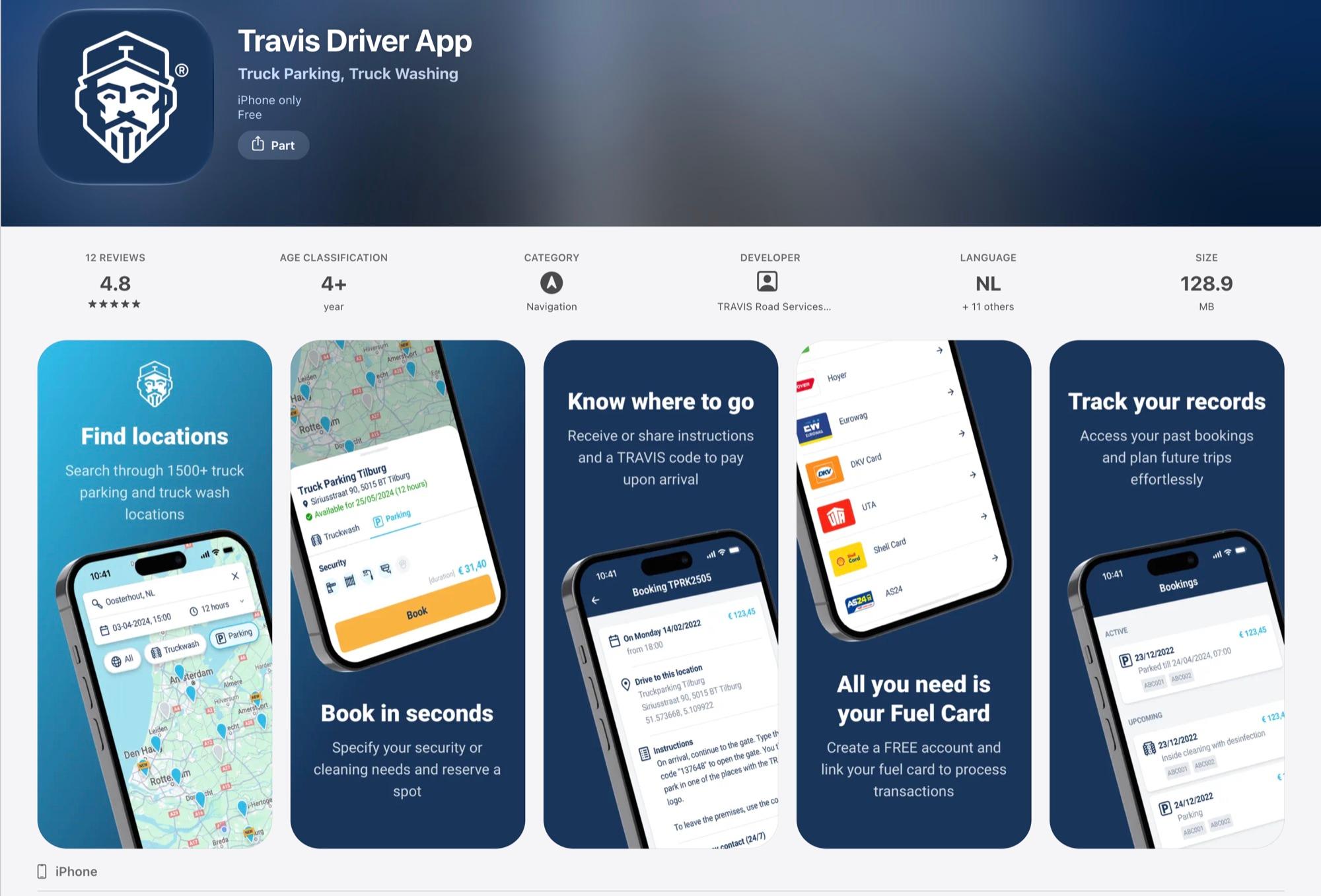
TRAVIS is a company in Tilburg, in the Netherlands. Its platform lets transport companies and truck drivers find, book and pay for services on the road across Europe: parking, washing, repairs or charging. Drivers do it from its app, the Driver App. I spent five months there as a marketing intern while finishing my degree.
The campaign was the most visible part, but I did quite a bit more. Here it is, piece by piece.
The ad campaign
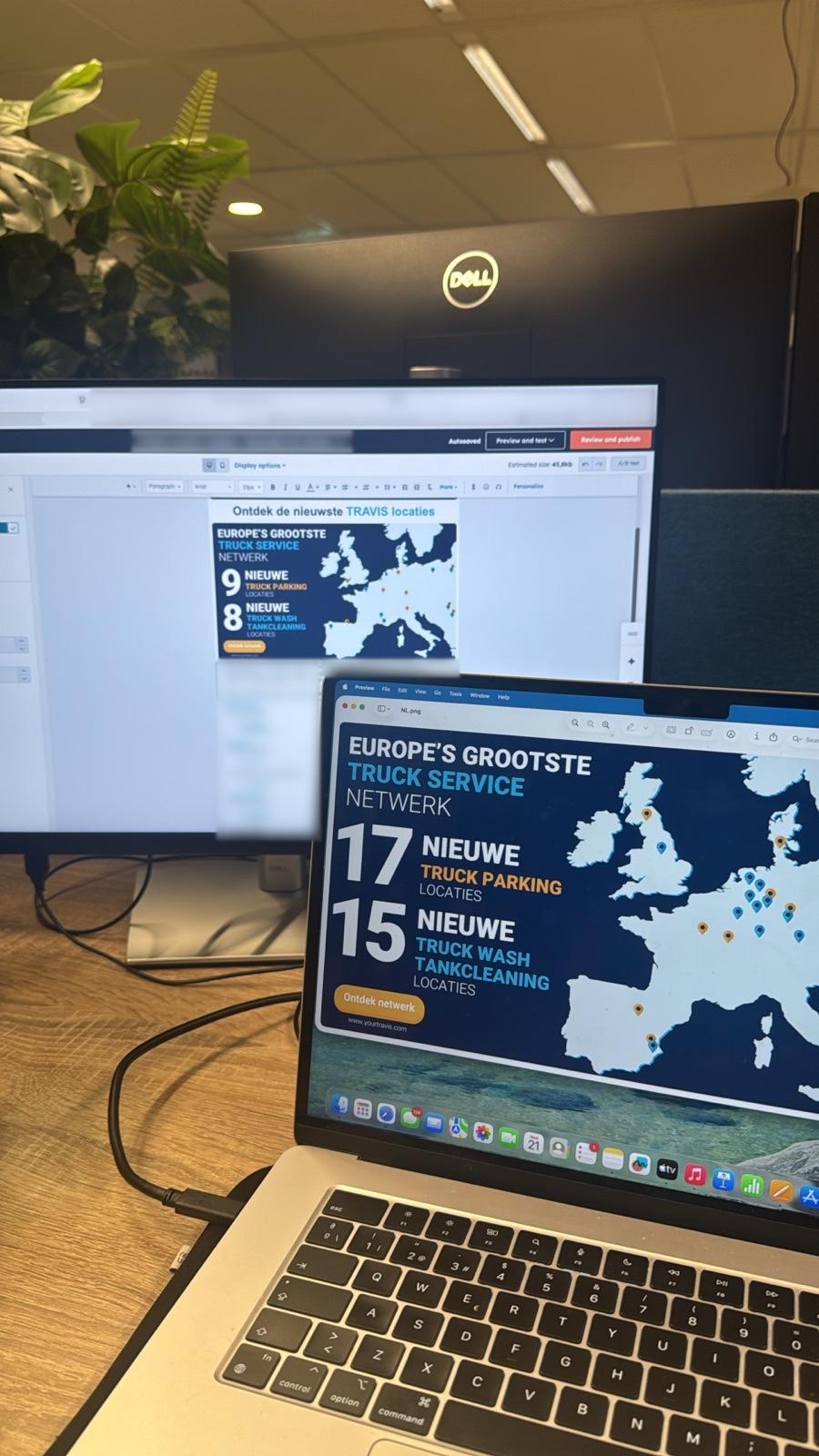
The previous ads focused mainly on the app's features. I proposed a campaign built around drivers' everyday problems, particularly finding somewhere to stop. I developed the creative concept “The problem isn't stopping. It's where” and prepared the ads in six languages.
In the initial tests, link CTR increased from 2.22% to 3.26% (+1.04 percentage points), while cost per click fell from €0.11 to €0.08 (−27%).
I then analysed a full month of data (1.12 million impressions) and recommended two things: focus the budget on English and Spanish, and don't spend more yet. A website visit isn't a driver who books. The team applied the budget change; install tracking wasn't set up while I was there.
Sorting out communication
TRAVIS's communications were spread across different channels and teams, making it difficult to maintain a consolidated view. I analysed 576 email records and 188 social posts to build a framework covering audiences, channels, lifecycle stages, ownership and KPIs.
I handed it to the marketing team when my internship ended.
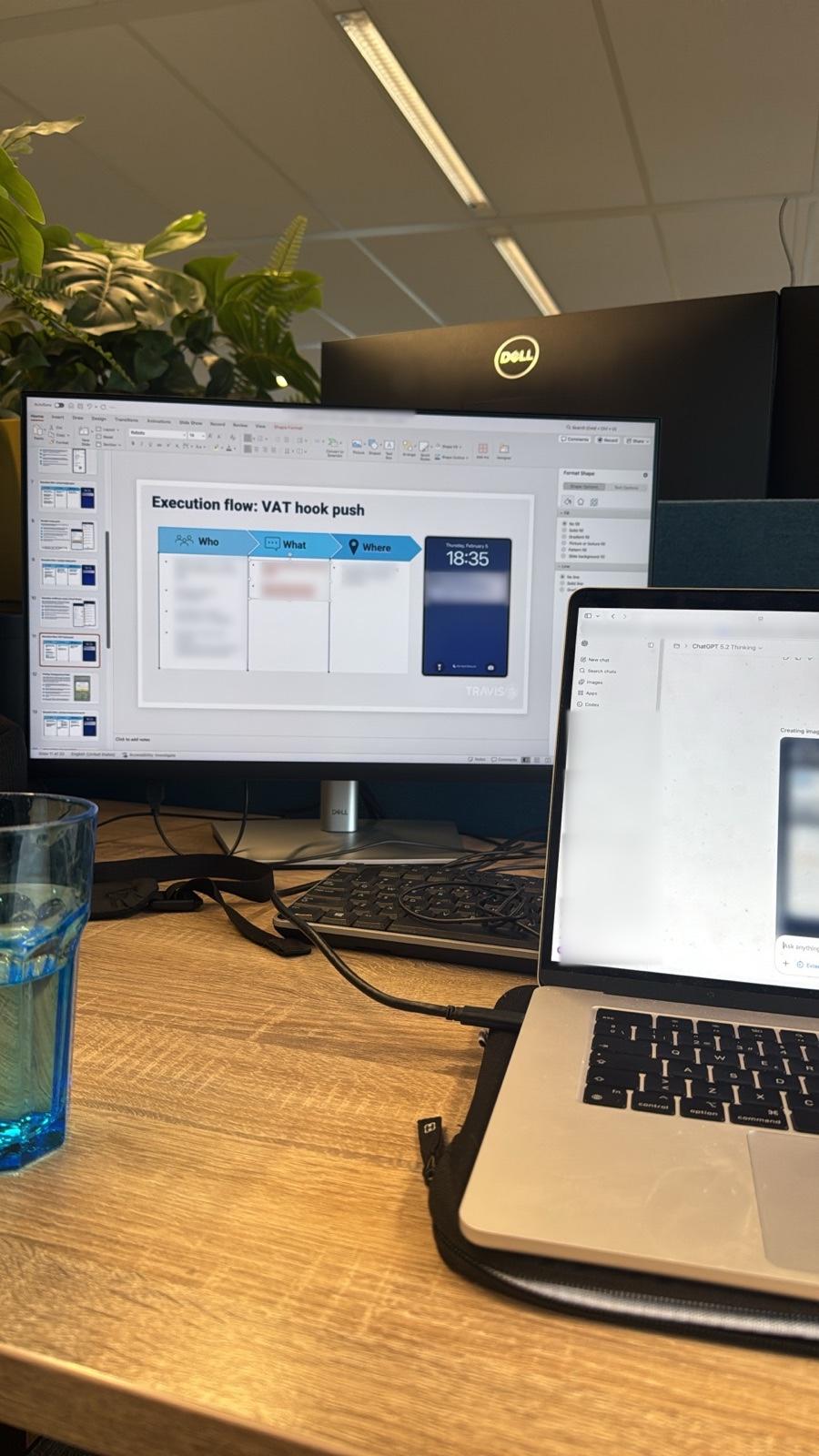
One notification, nine languages
Sending the same alert to drivers in nine languages meant building nine branches by hand. I wrote a 27-step guide to do it from a single flow, with one multilingual template.
The aim was simple: less manual work and fewer mistakes every time something needed announcing.
Trade fairs and partners
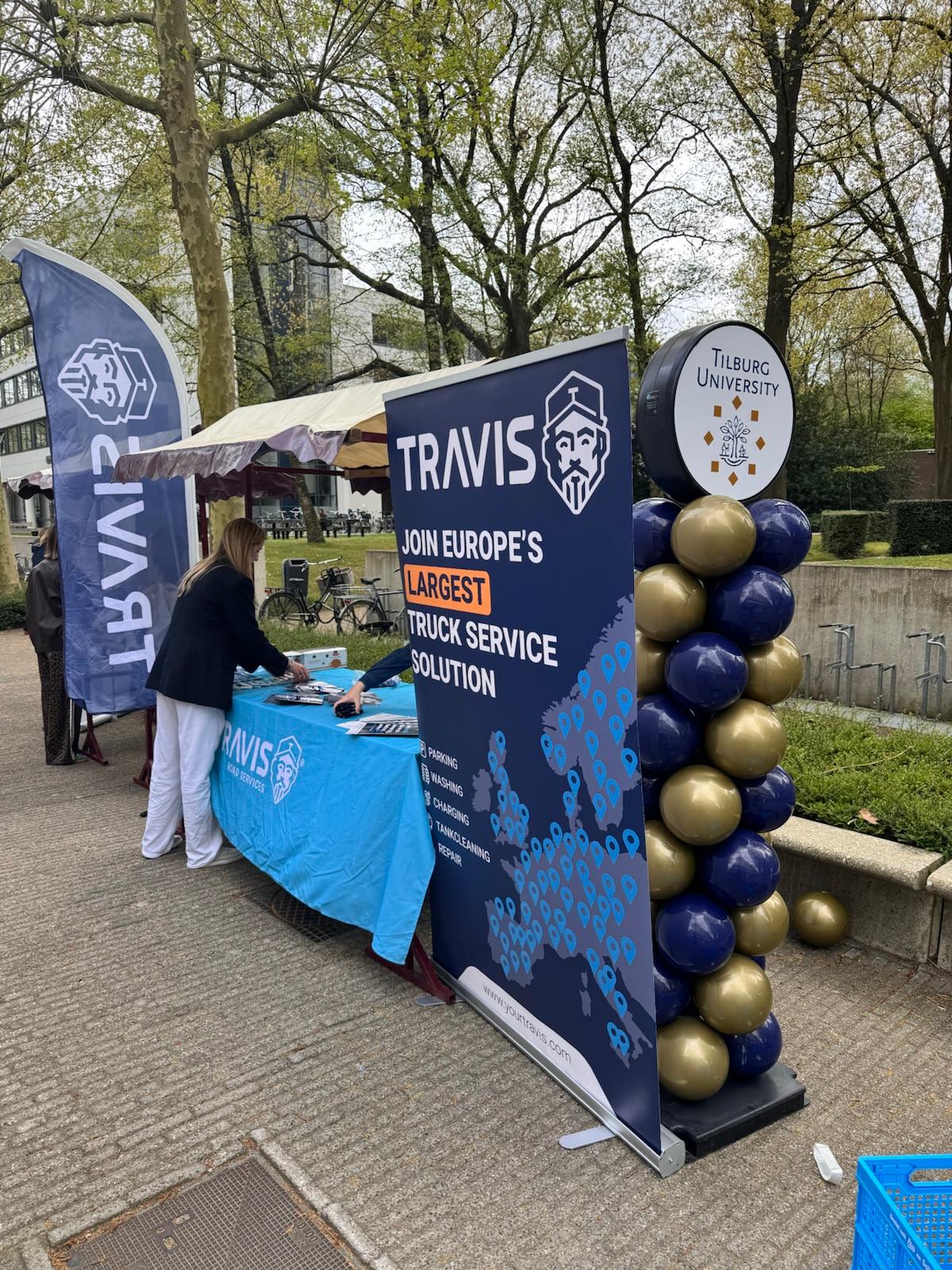
To decide which trade fairs to attend, I wrote to eight European organisers and seven sent back prices and attendance figures. I compared them with one criterion: go where the drivers are, not where the fleet managers are.
I also mapped approximately 40 TRAVIS partners across seven categories and developed a proposed collaboration with a truck festival.
How the company presents itself to candidates
I identified an opportunity to standardise job descriptions and better distinguish the purposes of the ‘About Us’ and ‘Careers’ pages. I benchmarked eleven companies and proposed a clearer, more consistent structure.
From that I drafted a shared template for job ads, with one rewritten example. The team adopted it for new openings.
Tools and other initiatives
I developed a web calculator that allowed parking operators to estimate potential revenue with TRAVIS based on available spaces, pricing and occupancy. The team used it as a commercial tool.
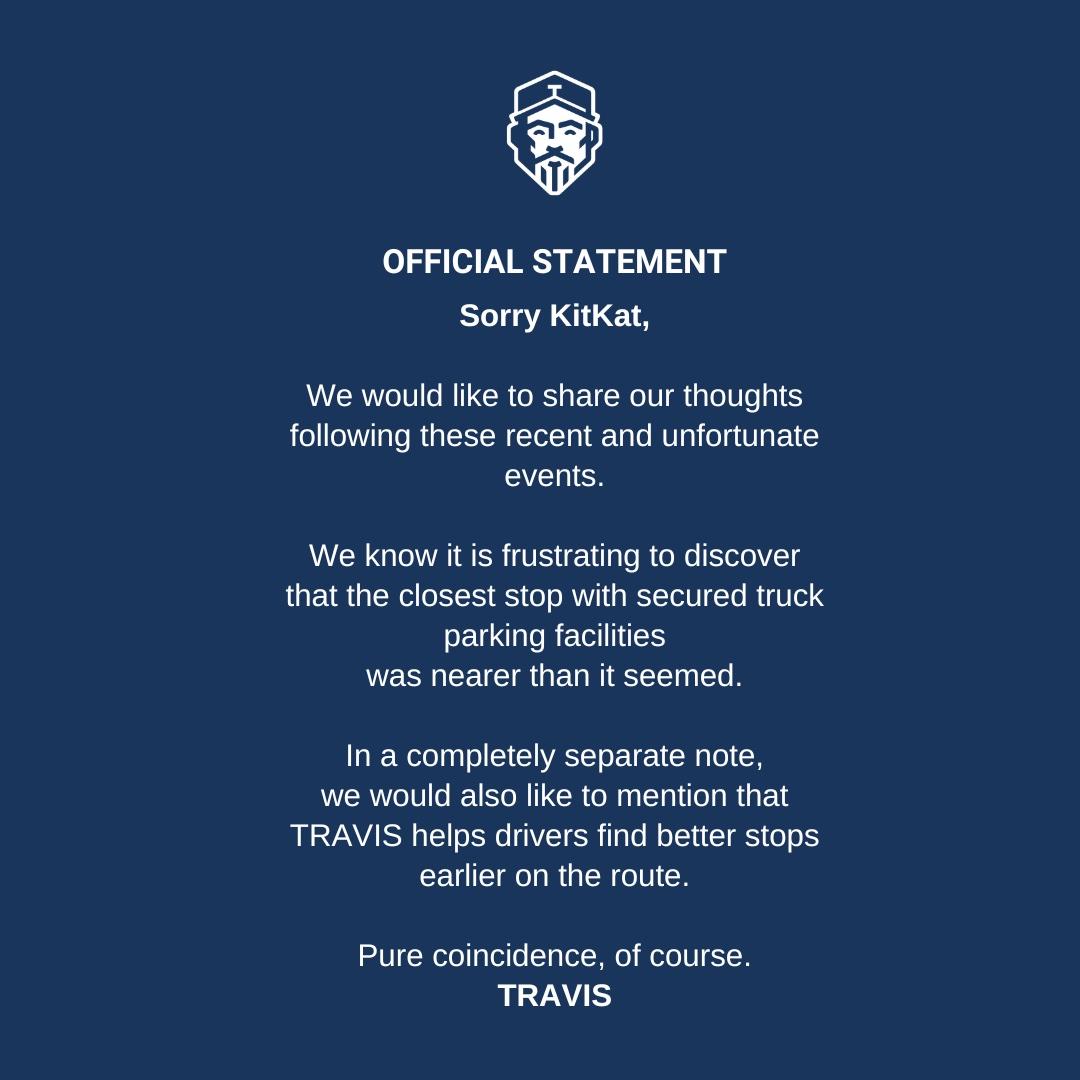
I also worked on a rapid-response ad concept styled as a press statement, which remained at the proposal stage.
What I learned
That a good number can hide the question that matters. Clicks were cheap; what mattered was how many drivers ended up booking.